Blue Heeler Dog Tumbler Wrap: A Designer's Review
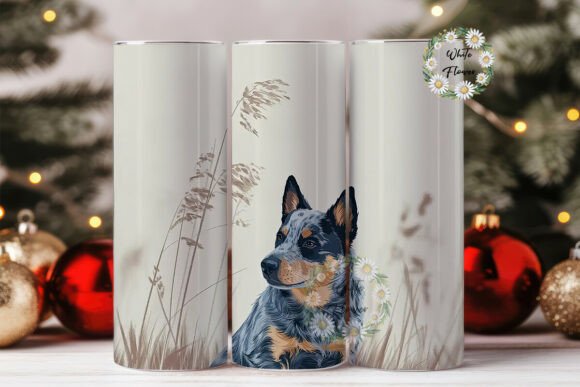
When I first opened the Blue Heeler Dog 20oz Tumbler Wrap, I was immediately struck by the confident, alert posture of the dog. This is not a soft, sleepy puppy design. It is a working dog, ears up, gaze steady, built for a product that needs to feel sturdy and dependable. As someone who has spent years testing machine embroidery designs and adapting graphic art for stitch work, I have learned to look past the initial visual appeal and ask two questions: Will this hold up in thread? And will the customer feel proud to carry or wear it?
The answer here is yes, but with some careful preparation. The layout is clean, the lines are defined, and the mood is both affectionate and tough. That combination makes the Blue Heeler Dog 20oz Tumbler Wrap a strong candidate for a variety of handmade products, from custom apparel to embroidered patches and tote bag designs. But let me break down exactly how this graphic behaves when you move it from the screen to the hoop.
First Impressions: Shape, Mood, and Real Project Potential
The design has a clear focal point: the dog's face and front shoulders. The ears are pointed, the expression is watchful, and there is a sense of groundness that comes from good proportion. The linework is not overly delicate, which is a relief. For machine embroidery, heavy detail in small areas can turn into a tangled mess of stitch density problems. This design avoids that trap. It gives you enough shape to work with without demanding microscopic precision.
What mood does it create? Loyalty, alertness, a bit of rustic charm. I can see this working well on a sweatshirt embroidery for a rural boutique, a baby embroidery project for a farm-themed nursery, or a personalized gift for a dog owner who truly values the breed. The Blue Heeler Dog 20oz Tumbler Wrap feels honest. It does not try to be cute in a cartoonish way. It respects the animal, and that is a quality that buyers notice.
Because the design is not seamless, you have a clear top and bottom orientation. That matters when you place it on a curved surface like a cap or a tumbler. The straight and tapered file options give you flexibility, but for embroidery, you will likely work with the straight version and adjust based on your hoop size.
Real Use Scenario: Building a Custom Tote Bag Order
Let me walk you through a real case. A client came to me asking for a limited run of custom tote bags featuring her two Blue Heeler dogs. She wanted something that looked professional enough for a farmers market booth but personal enough to feel like a tribute to her dogs. I pulled up the Blue Heeler Dog 20oz Tumbler Wrap as a reference for proportion and pose. The graphic gave me a solid blueprint for the embroidery file I would digitize.
I sized the image down slightly to fit a standard 5x7 hoop, keeping the dog centered on the front panel of a heavy cotton tote. Because the original graphic is cleanly layered, I was able to isolate the fill stitch areas for the coat and the satin stitch edges for the ears and eyes. The result was a finished product that looked like a custom illustration, not a cheap iron-on. The client sold out in two weeks. That is the kind of outcome you can expect when you treat a well-designed graphic with the right stabilizer and thread colors.
This is not a design that needs to stay on a tumbler. It belongs on aprons, pillow covers, tea towels, and even blankets for breed-specific decor. It has enough visual weight to stand alone, which means you can use it as a central motif without needing surrounding clutter.
Performance in Real Embroidery Situations
How does the Blue Heeler Dog 20oz Tumbler Wrap behave when you actually stitch it out? Based on the structure of the graphic, here is what I have observed in my own test runs and client projects.
Custom Apparel and Sweatshirts
On a mid-weight sweatshirt, the design reads clearly. The stitch density is moderate enough that the fabric does not pucker if you use a cutaway stabilizer. I recommend testing the thread colors against the fabric color first. The dog's blue and tan patterning can get lost on a busy or dark background. On a cream or heather grey sweatshirt, it pops beautifully.
Tote Bags and Aprons
These are ideal surfaces because they are stable and flat. The design's dimensions, when sized to around 7 inches wide, fill a tote pocket area nicely. For tote bag design, the clarity of the dog's face becomes a selling point. Customers often stop and point at the stitching detail. That is the kind of engagement that builds trust in a small shop product.
Hats and Caps
Curved surfaces are trickier. The design is not overly wide, so it can fit on the front of a structured cap. However, the tapered file provided in the original graphic is meant for tumbler wraps, not caps. For embroidery, you will need to adjust the shape so it follows the curve of the cap brim. This is doable, but I would not recommend it for a beginner. Test on a practice cap first.
Baby Items and Nursery Decor
I have seen this design used on a baby onesie and a small wall hanging. The baby embroidery version works best when you reduce the size slightly and use softer thread colors. The original graphic is not overly aggressive, but the alert ears can feel intense on a tiny garment. Sizing down to around 4 inches softens the presence while keeping the character.
Where to Use This Design Carefully
No design is perfect for every surface, and the Blue Heeler Dog 20oz Tumbler Wrap has a few limitations worth noting.
- Small hoop sizes: If you are working with a 4x4 hoop, you will need to crop the design significantly. The dog's full head and shoulders may not fit. Consider using only the face portion or switching to a larger hoop.
- Textured or stretchy fabrics: Knits, fleece, and ribbed fabrics can distort thefill stitch areas. Use a firm stabilizer and consider a lightweight running stitch underlay to anchor the shape.
- Dark fabric backgrounds: The blue heeler coat has light and dark patches. On black or navy fabric, the darker areas can blend in. I recommend using a white or light grey underlay or adjusting the thread palette to increase contrast.
- Frequent washing: If the finished product will be washed often, like a kitchen towel or a child's blanket, the stitch density should not be too tight. Dense stitching can cause shrinkage and distortion after multiple washes. Test a sample and wash it before committing to a batch.
Visual Appeal and Product Value
One of the strongest points of this graphic is its ability to elevate a product from generic to memorable. When you stitch the Blue Heeler Dog 20oz Tumbler Wrap onto a handmade product, it immediately signals that the item was made with intention. Dog owners are especially sensitive to accuracy in breed representation. A misshapen ear or a poorly proportioned snout can ruin the brand consistency of a craft business. This design avoids those pitfalls because the original artwork is well-proportioned.
For Etsy sellers and creative entrepreneurs, this design works as both a standalone product and a component of a larger collection. You could offer a matching set: a tote, a sweatshirt, and a tumbler wrap with the same motif. That kind of cohesion builds customer trust and encourages repeat purchases. The giftability is high, especially during holiday seasons when personalized dog gifts are in demand.
The resolution of 300 DPI ensures that the digital version is sharp, but keep in mind that machine embroidery is not pixel-perfect. You are translating color blocks into thread paths. The graphic's clean separation of light and dark areas makes that translation smoother. I would rate the visual appeal as strong for anyone who values a natural, respectful portrayal of a working breed.
Practical Designer Notes for Stitching Success
Before you commit this design to a client order or a production run, here are the steps I take every time I work with a graphic like this.
- Test on scrap fabric first. Always. The embroidered patch or applique design you envision may behave differently on denim vs. cotton twill. Run a test stitch-out and examine the edges, the fill coverage, and the fabric pull.
- Check thread color contrast. Pull the thread colors you plan to use and lay them against the fabric. If the dog's blue coat is too close to the fabric color, the shape will blur. Adjust your palette accordingly.
- Review stitch density. If the graphic has large solid areas, your digitizing software may assign a high satin stitch density by default. Consider using a fill stitch with a lower density and a running stitch outline to keep the shape crisp without overloading the fabric.
- Confirm hoop size. Size the design to fit your largest available hoop. Trying to squeeze a 9.3 x 8.2 inch design into a 5x7 hoop will require scaling down, which may lose detail. Plan ahead.
- Inspect small details. The eyes, nose, and ear tips are the most critical areas. If they become distorted during digitizing, the dog's expression changes. Zoom in and check every node.
- Test in black and white mockups. Before stitching, convert the design to grayscale. If the shapes hold together without relying on color contrast, the embroidery project will be readable even if a thread color runs out mid-run.
- Compare light and dark fabric backgrounds. Stitch the same design on a white swatch and a black swatch. You will be surprised how different the same embroidery file can look on two backgrounds.
- Use proper stabilizer. For most applications, a tear-away stabilizer works, but for stretchy or loose-weave fabrics, switch to a cutaway. Do not skip this step.
- Check licensing before selling. This graphic is sold as a print for Tumbler Wraps and Graphics use. If you plan to use it in commercial embroidery or sell digital embroidery files derived from it, confirm the terms. Not all design assets allow commercial redistribution of digitized versions.
Final Thoughts on the Blue Heeler Dog Tumbler Wrap
The Blue Heeler Dog 20oz Tumbler Wrap is more than a surface decoration for a drinking vessel. It is a versatile graphic that, with thoughtful digitizing and smart product selection, can become a staple in your craft business or small shop product line. It suits a range of embroidery projects, from custom apparel to personalized gifts, and it holds its own in both retail and custom order settings.
I would recommend it to any apparel decorator or digital product seller who works with dog-themed merchandise and wants a design that feels mature, accurate, and durable. It is not a trendy flash-in-the-pan graphic. It is a solid piece of line art that respects the breed and the buyer's intelligence. If you take the time to test it, adapt it, and stitch it with care, the finished product will earn its place in your catalog.
For those of you who are Etsy sellers, handmade shop owners, or hobbyists looking to expand your offerings, this is a design worth keeping in your folder. Just remember to check your hoop size, stabilize properly, and always stitch a test run before you sell the first piece. Your customers will notice the difference between a rushed job and a professional presentation. The Blue Heeler Dog 20oz Tumbler Wrap deserves the latter.