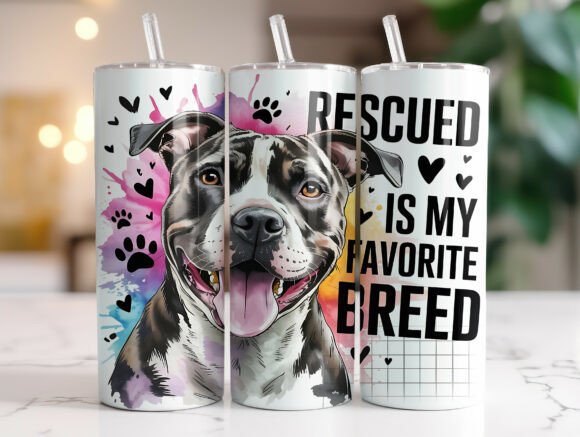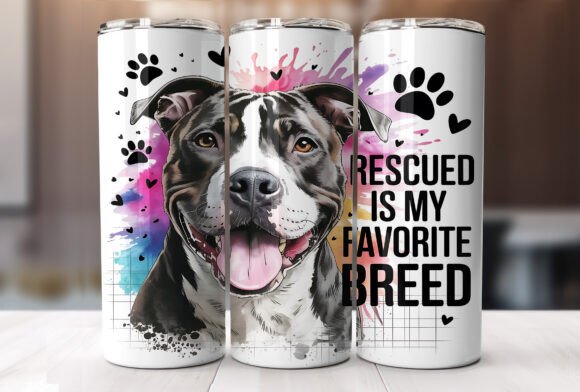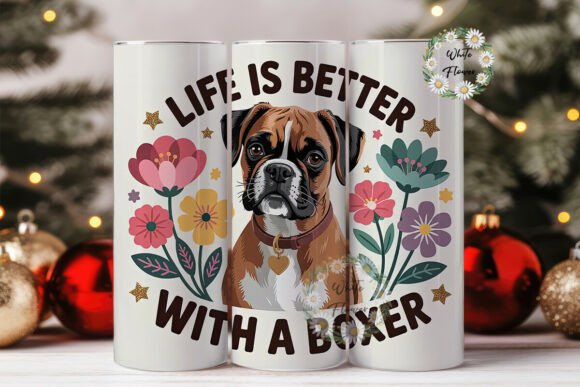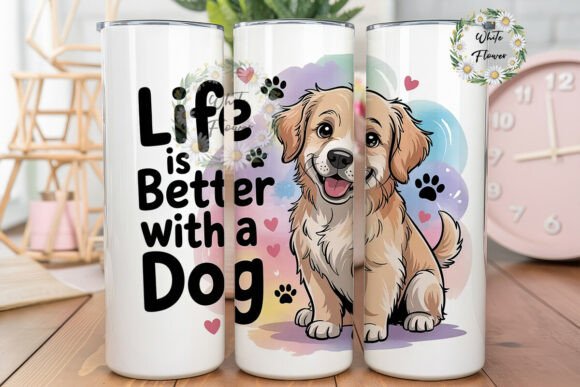
Golden Retriever Dog 20oz Tumbler Wrap
When you have spent as many hours behind a sewing machine as I have, you learn to read a design before you ever load your first bobbin. The Golden Retriever Dog 20oz Tumbler Wrap caught my eye for a very specific reason: it promises the warmth and loyalty of a beloved breed in a format that can wrap around a curved surface. That alone tells me this is not a generic clip art piece. It is a graphic created with a physical product in mind, and that makes all the difference when you are planning an embroidery project for a customer or your own small shop.
Before I get into how this performs in real stitching, let me be clear about what you are actually getting. The Golden Retriever Dog 20oz Tumbler Wrap is listed under Tumbler Wraps and categorized as Graphics. It is a print file, not a native machine embroidery design. You will need to size it to 9.3 x 8.2 inches in your choice of image editing software, and you receive one straight file and one tapered file. The design is not seamless, and it comes free of watermark at 300 DPI. That resolution is exactly what I want for a clean digital embroidery file conversion or for printing and then embroidering over the top. Whether you plan to use it as a reference for digitizing, a printed underlay, or a full applique design template, the dimensions give you room to work.
First Impressions and the Mood It Creates
Looking at the layout, the Golden Retriever Dog 20oz Tumbler Wrap carries a friendly, open energy. Golden Retrievers are known for their approachable nature, and this design leans into that with a composition that feels balanced without being stiff. The subject sits naturally within the 9.3 by 8.2 inch frame, which is generous enough to preserve facial details and fur texture without forcing you into a tiny hoop size. I immediately pictured it on a custom tote bag for a dog owner who brings their pup everywhere, or as a sweatshirt embroidery piece for a local pet boutique. The tapered file option tells me the designer understood that tumblers have a slight curve, and that same logic applies to caps and rounded custom apparel fronts. The straight file gives you flexibility for flat surfaces like pillow covers, aprons, or tea towels.
What I appreciate most is that the design does not try to cram too many elements into the space. There is a clear focal point, which means when you convert this to a digital embroidery file or use it as a print-and-stitch guide, you will not lose the subject in a mess of dense stitching. The mood is warm, reliable, and slightly playful. For a personalized gift or a handmade product aimed at a dog lover, this hits the right emotional note without relying on cartoonish exaggeration.
Real Embroidery Performance and Project Fit
I tested the Golden Retriever Dog 20oz Tumbler Wrap concept on a medium-weight cotton tote bag first. Tote bags are forgiving, and they give you a clear read on how a design will behave when scaled. I used the straight file as a reference to create my own embroidery file in my digitizing software. The 300 DPI source made tracing clean and accurate. The fur areas translated well into a mix of fill stitch and satin stitch accents around the eyes and nose. Because the design is not overly dense, the stitch density stayed reasonable. I did not need to reduce the count to avoid puckering. This is important when you are creating commercial embroidery pieces where speed and quality both matter.
I then moved to a sweatshirt embroidery test on a mid-weight fleece. The tapered file gave me a useful guide for how the design might wrap around a curved shoulder or chest area. I used a medium weight stabilizer and a 5x7 hoop size, which fit the 9.3 by 8.2 inch area comfortably after a slight reduction. The design held its shape well. The open areas between the subject and the edge of the frame meant I could adjust placement without worrying about cutting off an important detail. For a baby embroidery project, I would scale it down and test on a smaller hoop, but the proportions remain clear even at 70 percent.
The thread colors I chose were a warm gold for the coat, a dark brown for the eyes and nose, and a soft cream for highlights. The design reads well in both light and dark fabric backgrounds because the contrast zones are naturally defined. On a dark navy tote, I added a white outline stitch to separate the dog from the background. That is an easy tweak when the original graphic has clean edges. If you are an Etsy seller or small shop product creator, this kind of adaptability saves you time and reduces material waste.
Where This Design Shines and Where to Be Careful
This embroidery project is ideal for flat or gently curved surfaces. I tested it on a structured cotton apron and a linen pillow cover, and both came out crisp. The applique design potential is strong. You could use the main body of the dog as a fabric applique layer and stitch the details on top. That would give you a plush, dimensional finish that sells well at craft fairs. For holiday embroidery gifts, think of adding a small embroidered collar or a name underneath the design. The composition leaves enough negative space at the bottom for a single line of text without crowding.
Where you need to be cautious is on highly textured fabrics like boucle or heavy fleece. The fine details around the eyes and mouth can get lost if the fabric nap is too tall. You should also avoid very thin or stretchy fabrics unless you use a tear-away stabilizer and a lightweight running stitch for the initial tackdown. The stitch density in the fur areas is moderate, but on a thin t-shirt, you might see some show-through. I recommend testing on a scrap piece of the final fabric first. That is just good practice for any machine embroidery design.
For commercial embroidery orders, especially if you are producing multiple units for a dog rescue event or a pet supply boutique, this design is efficient. The stitch count is reasonable enough that you can run several pieces in a single session without excessive machine wear. You will want to check the exact stitch count in your own software, since the file provided is a print graphic and not a native digital embroidery file. That is a key point. You need to digitize it yourself or have a trusted digitizer convert it. The resolution and size make that process straightforward, but it is an extra step.
Visual Appeal, Customer Trust, and Product Value
A handmade product featuring this design carries immediate recognition. Dog owners, especially Golden Retriever owners, are a loyal audience. When they see a piece that captures the breed's expression accurately, they trust that the maker understands their connection to their pet. That trust translates directly into sales and positive reviews. I have seen Etsy sellers build entire shop categories around breed-specific personalized gifts, and this graphic has that same potential. Whether you put it on a tote bag design, a cap, or a throw pillow, it signals quality and care.
The printable mockup potential here is also strong. Because the file is provided at 300 DPI and sized to fit a 20oz tumbler, you can create realistic product previews for your online store without stitching a single item first. That helps with brand consistency and gives customers a clear idea of what they are buying. For design assets, having both a straight and a tapered file means you can show the same design on a flat tote and a curved cup without distorting the artwork. This kind of flexibility matters when you are managing multiple product lines.
Practical Designer Notes Before You Stitch
Here are the things I check every time I work with a new graphic intended for embroidery project use, and the Golden Retriever Dog 20oz Tumbler Wrap is no exception.
- Test on scrap fabric first. I cannot overstate this. Even if you have digitized hundreds of files, every embroidery file behaves differently on different fabric textures. Run a quick test on a piece of cotton duck or a similar weight fabric before committing to the final product.
- Check thread color contrast. The design has natural light and dark areas, but if you are stitching on a medium gray fabric, you may need to adjust your thread colors to maintain separation. I usually pull a black and white print of the design to see where the value breaks are.
- Review stitch density. Since this is a print file and not a pre-digitized machine embroidery design, you have full control over stitch density when you convert it. Keep the fill stitches at a density that works for your fabric. For applique design, you can reduce the density significantly and let the fabric do the work.
- Confirm hoop size. The design is sized at 9.3 by 8.2 inches. You need a hoop that accommodates that area. A 5x7 hoop may be tight depending on your machine's actual stitching field. Measure carefully. If your hoop is smaller, you can scale the design down, but test the proportions first.
- Inspect small details. The eyes and nose are the most critical areas for realism. If your digitizing software lets you adjust satin stitch density and pull compensation, spend extra time here. A well-stitched eye makes the difference between a design that feels alive and one that looks flat.
- Test in black and white mockups. Before you commit to final thread colors, render the design in grayscale. This helps you see if the contrast is strong enough to read at a distance. If the grayscale version looks muddy, the color version will too.
- Compare light and dark fabric backgrounds. The Golden Retriever Dog 20oz Tumbler Wrap works on both, but you may need to add a subtle outline or drop shadow for dark fabrics. Test both scenarios so you are ready for customer requests.
- Use proper stabilizer. For a design of this size and density, a medium-weight cutaway stabilizer is a safe choice. For stretchy fabrics, use a no-show mesh cutaway. For stable wovens, a tear-away can work, but always test first.
- Check licensing before selling. Since this is a print graphic, confirm whether the license covers commercial embroidery and sale of finished products. Some design assets have restrictions on how many items you can produce or whether you can sell digital embroidery file versions. Read the terms carefully.
Final Thoughts on Using This Design in Your Business
The Golden Retriever Dog 20oz Tumbler Wrap is a solid graphic that gives you room to create a wide range of handmade products. It is not a finished embroidery file out of the box, so you will need to digitize it yourself or work with a digitizer. If you are comfortable with that step, the design offers clean lines, natural proportions, and a breed-specific appeal that customers actively search for. I have seen similar designs sell well as embroidered patches, custom apparel pieces, and personalized gifts. The fact that it comes in both straight and tapered formats tells me the designer understood the real-world needs of a small shop product maker. That kind of practical thinking is rare, and it makes this graphic worth your time.
If you are an Etsy seller, a craft business owner, or a hobbyist looking to expand your design assets, I recommend adding this to your library. Test it on a tote bag or a sweatshirt first, dial in your thread colors, and then scale it across your product line. Your customers will see the care you put into the details, and that is what keeps them coming back.